
Marinating chicken for just 15 minutes might seem too brief, but it’s enough to infuse real flavor and keep things simple. I used to think longer was always better, but I learned that a quick rest in a punchy marinade can make the chicken tender and flavorful without overthinking it.
This recipe is about the little things—how a brisk marinade, a hot grill, and a few fresh herbs turn into something that feels both familiar and just a bit special. It’s perfect for those busy nights when you want something satisfying without spending hours in the kitchen. Plus, the aroma of grilled chicken with garlic and lemon always pulls everyone close.
Focusing on the overlooked importance of marinade timing and how a simple 15-minute rest can deeply enhance flavor penetration and tenderness.
The story behind this recipe
- This recipe came from a backyard mishap—an accidental marinade that turned out to be a revelation. I was rushing to get dinner on the table, threw some spices and lemon juice together, and accidentally left the chicken to soak a little longer than planned. The result? Juicy, tender skewers with a smoky zing that everyone loved.
- Since then, I’ve leaned into the idea that imperfect timing can sometimes produce the most flavorful results. It’s about trusting those small, spontaneous moments in the kitchen—letting the marinade work its magic, even if it’s just for a bit longer than you intended.
- heading:
Key Ingredients and Tips
- Chicken thighs: I prefer boneless, skinless thighs—they stay juicy and soak up marinades like a sponge, giving me that rich, savory bite you can’t get from breasts. You might want to trim excess fat for less flare-up on the grill.
- Olive oil: I use good-quality extra virgin—its fruity aroma and smooth texture really help the marinade cling and penetrate. If you’re out, a neutral oil works, but don’t skip the oil altogether.
- Garlic: I smash and finely chop or grate fresh garlic—it releases a punchy aroma that wakes up everything. If you’re in a rush, garlic powder works, but fresh is better for that pungent, aromatic kick.
- Lemon juice: I squeeze fresh lemons—nothing beats the bright, zesty punch that wakes up the chicken. Bottled lemon juice can work in a pinch but loses that vibrant fresh scent.
- Herbs (parsley, oregano): I like fresh herbs, especially chopped parsley or oregano—they add freshness and a pop of color. Dried herbs are okay, just use less since they’re more concentrated and can taste dull if overused.
- Skewers: I prefer metal skewers—they conduct heat well and can be reused. If you use wood, soak them in water for at least 30 minutes to prevent burning.
- Salt & pepper: I season generously—salt enhances flavor, and freshly cracked pepper adds a subtle heat. Adjust to your taste, but don’t hold back on the seasoning before grilling.
Spotlight on key ingredients
Chicken thighs:
- I prefer boneless, skinless thighs—they stay juicy and soak up marinades like a sponge, giving me that rich, savory bite you can’t get from breasts. You might want to trim excess fat for less flare-up on the grill.
- Olive oil: I use good-quality extra virgin—its fruity aroma and smooth texture really help the marinade cling and penetrate. If you’re out, a neutral oil works, but don’t skip the oil altogether.
- Lemon juice: I squeeze fresh lemons—nothing beats the bright, zesty punch that wakes up the chicken. Bottled lemon juice can work in a pinch but loses that vibrant fresh scent.
Fresh herbs and garlic:
- Garlic: I smash and finely chop or grate fresh garlic—it releases a punchy aroma that wakes up everything. If you’re in a rush, garlic powder works, but fresh is better for that pungent, aromatic kick.
- Herbs (parsley, oregano): I like fresh herbs, especially chopped parsley or oregano—they add freshness and a pop of color. Dried herbs are okay, just use less since they’re more concentrated and can taste dull if overused.
Notes for ingredient swaps
- Dairy-Free: Olive oil works perfectly, no need for butter or dairy. Keeps it light and clean-tasting.
- Gluten-Free: Ensure soy sauce is tamari or coconut aminos for a gluten-free marinade swap.
- Herb Variations: Use fresh cilantro or basil instead of parsley or oregano for a different herbal punch.
- Sweetener: Honey or maple syrup can replace sugar in the marinade for a subtle, caramelized sweetness.
- Acid Substitute: Lime juice or vinegar (like apple cider) can stand in for lemon, adding a different zing.
- Oil Choice: Avocado oil adds a mild, buttery flavor and high smoke point—great for grilling.
- Skewers: Metal skewers are reusable, but if you use wooden ones, soak in water for 30 minutes to prevent burning.
Equipment & Tools
- Skewers: Hold chicken pieces for grilling and easy turning.
- Grill or grill pan: Cook the skewers evenly with good heat.
- Tongs: Handle and turn skewers without piercing the meat.
- Small bowl: Mix marinade ingredients.
- Brush: Apply oil to grill or skewers to prevent sticking.
Step-by-step guide to chicken skewers
- Equipment & Tools: Skewers (metal or soaked wooden), grill or grill pan, tongs, small bowl, brush for oil.
- Prepare the chicken: Cut thighs into 2-inch cubes. Pat dry to ensure marinade sticks.
- Make marinade: Mix olive oil, lemon juice, minced garlic, chopped herbs, salt, and pepper in a small bowl.
- Marinate the chicken: Toss cubes in marinade until evenly coated. Cover and let sit for 15 minutes at room temperature.
- Prepare the grill: Heat to high (around 220°C / 430°F). Oil the grates lightly to prevent sticking.
- Assemble skewers: Thread chicken pieces onto skewers, leaving a small space between each piece for even cooking.
- Grill the skewers: Place on hot grill. Cook for about 4-5 minutes per side, turning until golden and cooked through.
- Check doneness: The chicken should be slightly charred, juices run clear, and internal temp hits 75°C / 165°F.
- Rest and serve: Let skewers rest for 3 minutes. Serve with a squeeze of lemon and fresh herbs for brightness.
Let the skewers rest for 3 minutes to allow juices to settle. Serve hot, garnished with lemon wedges and fresh herbs for an extra zing.
How to Know It’s Done
- Color: Skewers should be golden with some charred edges.
- Juices: Clear juices indicate fully cooked chicken.
- Temperature: Use a probe to ensure 75°C / 165°F inside the meat.
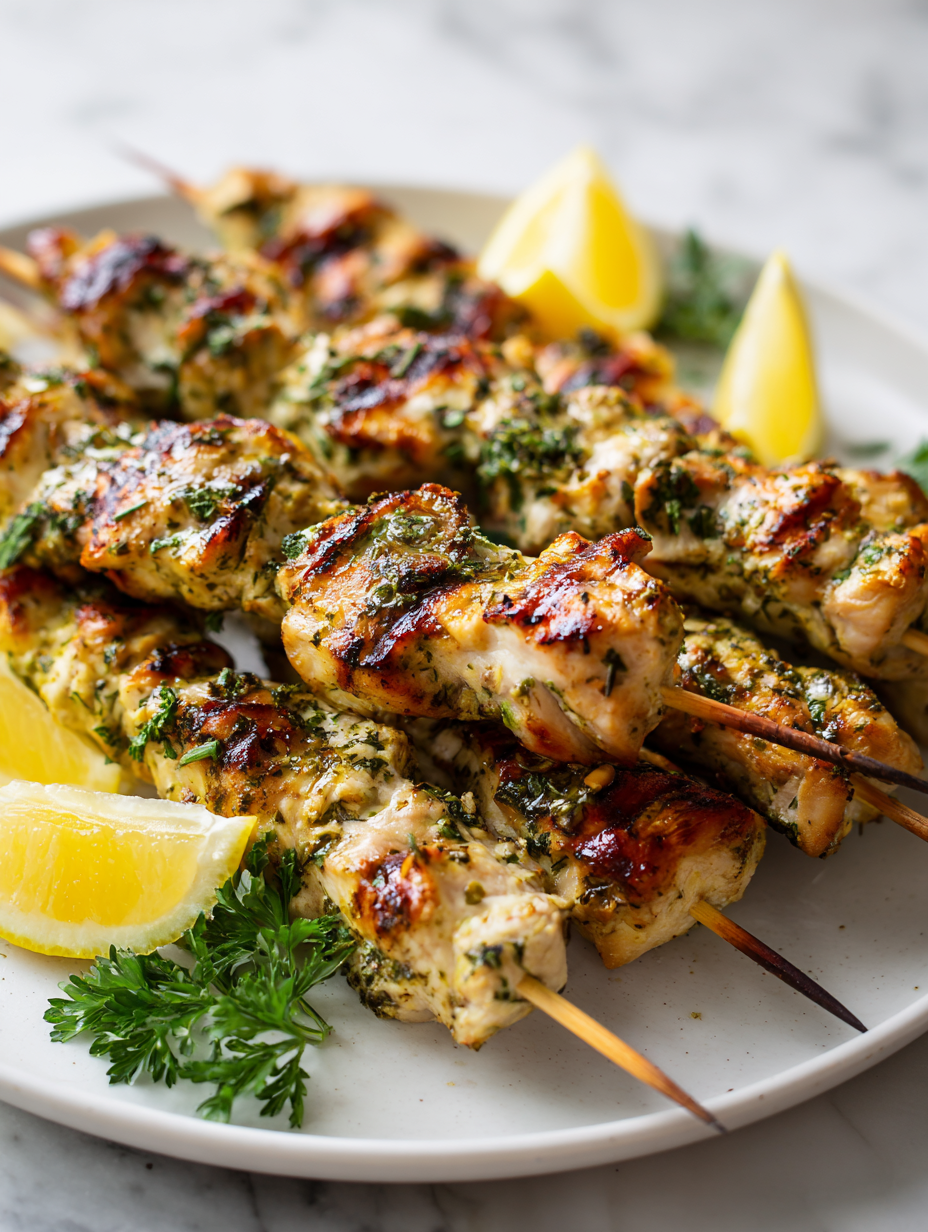
Grilled Lemon Herb Chicken Skewers
Ingredients
Equipment
Method
- Place the chicken cubes in a large bowl.
- In a small bowl, whisk together olive oil, lemon juice, chopped garlic, herbs, salt, and pepper to create the marinade.
- Pour the marinade over the chicken, tossing to coat each piece evenly. Cover the bowl with plastic wrap.
- Let the chicken marinate at room temperature for 15 minutes, allowing the flavors to infuse and the meat to tenderize.
- Preheat your grill or grill pan over high heat until shimmering hot, around 220°C / 430°F. Lightly oil the grates or pan to prevent sticking.
- Thread the marinated chicken pieces onto skewers, leaving a small space between each piece for even cooking.
- Place the skewers on the hot grill, cooking for 4-5 minutes per side, until golden brown with some charred spots and juices run clear.
- Use tongs to turn the skewers gently, ensuring even searing without piercing the meat.
- Check the internal temperature with a probe — it should reach 75°C / 165°F — and confirm the chicken is cooked through with a slight char on the edges.
- Remove the skewers from the grill, letting them rest for 3 minutes to allow the juices to redistribute.
- Serve the skewers hot, garnished with fresh herbs and lemon wedges for an extra pop of flavor.
Tips and tricks for perfect skewers
- High heat: Preheat your grill until it’s shimmering hot—this helps sear the chicken quickly, locking in juices and creating a smoky char.
- Uniform size: Cut chicken into similar-sized pieces—this ensures even cooking and prevents some bites from drying out while others are underdone.
- Marinate briefly: A quick 15-minute soak infuses flavor without over-softening the chicken—don’t skip this step for a tender, flavorful skewers.
- Oil the grill: Lightly brush the grates with oil before grilling—this prevents sticking and gives you those perfect grill marks.
- Turn carefully: Use tongs to turn skewers gently—avoid piercing the meat to keep it juicy and avoid flare-ups from dripping marinade.
- Rest before serving: Let the skewers rest for 3 minutes after grilling—this helps juices redistribute, making each bite moist and tender.
- Check doneness: Use a probe thermometer—aim for 75°C / 165°F inside, and look for a slight char with clear juices for perfect doneness.
Common mistakes and how to fix them
- FORGOT to marinate long enough? Extend marination time or increase herbs for deeper flavor.
- DUMPED marinade too early? Let chicken rest at least 15 minutes for better absorption.
- OVER-TORCHED skewers? Reduce grill heat or move skewers to cooler spot to prevent burning.
- MISSED internal temperature? Use a probe to confirm 75°C / 165°F before serving.
Quick fixes for perfect skewers
- If marinade is too thick, splash in a little lemon juice to loosen it up.
- When skewers stick, patch with a quick brush of oil on the grates before flipping.
- Splash a bit of water on flare-ups to tame smoky flames instantly.
- When chicken isn’t fully cooked, rescue with a quick 2-minute high-heat sear.
- Pantry swap: Use smoked paprika instead of regular for a deeper smoky aroma.
Prep, store, and reheat tips
- Marinate the chicken up to 24 hours ahead in the fridge; the flavors deepen and the meat stays juicy, with a bright lemon aroma when grilled.
- Assemble skewers a few hours before cooking—keep them covered in the fridge to prevent drying out. The marinated chicken benefits from resting in the marinade overnight for extra tenderness.
- Store leftover cooked skewers in an airtight container in the fridge for up to 3 days. Reheat in a hot skillet or grill for 2-3 minutes until sizzling and fragrant, with a slight smoky aroma returning.
- If reheating, tent the skewers with foil to keep moisture in. Expect the texture to be slightly less tender but still flavorful, with the marinade’s spices mellowing slightly.
Top questions about chicken skewers
1. Can I use chicken breasts instead?
Use chicken thighs for juiciness and flavor, as they stay tender and soak up marinade better than breasts.
2. How long should I marinate the chicken?
Marinate the chicken for at least 15 minutes; longer can deepen flavor but avoid overly long to prevent mushiness.
3. What temperature should the grill be?
Preheat your grill until it’s hot and shimmering—around 220°C / 430°F—to get a good sear and smoky flavor.
4. How do I know when the chicken is cooked?
Cook the skewers for about 4-5 minutes per side until they’re golden with some char and internal temp reaches 75°C / 165°F.
5. Can I use wooden skewers?
Soak wooden skewers in water for at least 30 minutes before threading chicken to prevent burning on the grill.
6. My skewers keep sticking, what do I do?
If the chicken sticks to the grill, brush the grates with oil beforehand, and turn skewers gently with tongs.
7. Should I let the chicken rest after grilling?
Rest the grilled skewers for about 3 minutes before serving to allow juices to redistribute for maximum tenderness.
8. Can I substitute bottled lemon juice?
Use fresh lemon juice for a bright, zesty flavor. Bottled lemon juice works but lacks that fresh, punchy aroma.
9. How should I store and reheat leftovers?
Leftover cooked skewers can be refrigerated for up to 3 days. Reheat in a hot skillet or grill for a quick, smoky boost.
10. What are signs of perfectly cooked chicken?
Avoid overcooking by using a probe thermometer. Juicy, slightly charred chicken is perfect, with clear juices and a golden color.
These chicken skewers aren’t just a quick grill job—they’re a reminder that simple ingredients, when treated right, can turn into something memorable. The smoky aroma and juicy bites always get people talking, even after the last skewer is gone.
In a busy week, I find myself craving this dish because it’s honest and straightforward, yet full of flavor. It’s one of those recipes that feels like a little celebration—no fancy fuss, just good food, fresh herbs, and the thrill of the grill.

Hi, I’m Emma Collins, the recipe developer and writer behind Sailing With Seasons. I’m so happy you’ve found your way here. This blog is my celebration of seasonal ingredients, simple cooking, and the quiet joy that comes from preparing food with intention. Sailing With Seasons is where I share the recipes, lessons, and kitchen rituals that have shaped my life. It is a space built on curiosity, care, and a deep respect for real ingredients.



Leave a Reply