
Using a slow cooker for split pea soup feels like giving it a gentle, patient hug. The low, slow heat turns humble peas into a velvety, rich broth with hardly any effort. It’s perfect for busy mornings or those lazy weekends when I want something nourishing without standing over the stove.
There’s something satisfying about knowing I can toss everything in before bed and wake up to a warm, fragrant bowl. The aroma alone—smoky ham, earthy peas, and a hint of thyme—makes the house feel cozy even if I’ve been running around all day. It’s honest, simple comfort in a pot, crafted with minimal fuss but maximum flavor.
This recipe is a reminder that good food doesn’t need fancy ingredients or complicated steps. Sometimes, all it takes is patience, a bit of planning, and a slow cooker to turn everyday ingredients into something special. It’s a bit of a quiet victory, especially when I see how much love and warmth a bowl of soup can bring to my table.
Focusing on how a slow cooker transforms humble split peas into a creamy, comforting soup with minimal fuss and maximum flavor, perfect for busy days or lazy weekends.
The story behind this recipe
This recipe came together during a particularly hectic week when I needed something warm and hearty without fuss. I remembered a time when my grandmother would toss a bunch of dried peas into her old slow cooker after a long day, and by evening, the house would fill with a smoky, savory aroma. That simple act of patience and the comforting smell of peas and ham really stuck with me. Now, I keep that memory alive with my own twist, knowing that a pot of split pea soup can be both a quick fix and a nostalgic hug after a busy day.
Breakdown of Key Ingredients
- Dried green split peas: I love the earthy, slightly grassy aroma they develop as they cook down; you can skip soaking if you’re in a rush, but expect a slightly firmer texture.
- Ham hock or smoked ham: The smoky, savory punch it adds is irreplaceable—if you want vegetarian, toss in a splash of smoked paprika for depth.
- Vegetables (onion, carrots, celery): The classic trio—adds sweetness and balance; chop them small so they melt into the soup, or leave some chunks for texture.
- Garlic: I prefer minced for a quick release of that pungent, aromatic scent; if you’re sensitive, reduce the amount, but don’t skip it entirely.
- Herbs (thyme, bay leaf): Fresh thyme is lovely, but dried works fine—just remember to fish out the bay leaf before serving, or it’ll be a surprise in every bite.
- Broth (chicken or vegetable): The base that carries everything—go for low-sodium if you want control over salt, or use a pre-made broth for convenience.
- Salt & pepper: Season gradually—start small, then taste. The smoky ham brings a good amount of salt, so don’t overdo it at first.
Spotlight on key ingredients
Split peas:
- Dried green split peas: They soften into a velvety texture, releasing a nutty aroma. Skip soaking, but expect a firmer bite if you do.
- Peas break down as they cook, creating that creamy body. Their earthy scent intensifies, filling the kitchen with warmth.
Ham hock or smoked ham:
- This ingredient imparts a smoky, savory depth. It becomes tender and shreddable, infusing the soup with richness.
- During cooking, the fat renders out, making the broth slightly oily but intensely flavorful. The smoky aroma is unmistakable and comforting.
Notes for ingredient swaps
- Dried green split peas: I prefer the earthy, slightly grassy aroma they develop when cooking; if you skip soaking, expect a bit more bite, but they’ll still soften if cooked longer.
- Ham hock or smoked ham: The smoky, savory depth is hard to replace—vegetarians can try smoked paprika or liquid smoke for similar richness.
- Vegetables (onion, carrots, celery): Fresh is best, but frozen works in a pinch; just chop or break into smaller pieces for even cooking.
- Garlic: Minced garlic releases the quickest aroma, but whole cloves can work if you want a milder, more subtle garlic note—just remove before serving.
- Broth (chicken or vegetable): Homemade broth adds depth, but store-bought low-sodium broth keeps it simple; for a vegan version, swap with mushroom or seaweed broth for umami.
- Salt & pepper: Start with less—ham adds salt, so taste before adding extra; pepper adds a gentle heat that brightens the flavor.
- Herbs (thyme, bay leaf): Fresh thyme is bright and fragrant, but dried is fine—just remember to fish out the bay leaf before serving, or it’ll surprise you with a sharp, tough texture.
Equipment & Tools
- Large slow cooker: To cook everything slowly and evenly over several hours.
- Knife: For chopping vegetables and preparing ham or vegetarian substitutes.
- Chopping board: To provide a stable surface for prep work.
- Skillet: To sauté vegetables, boosting sweetness and flavor.
- Measuring cups and spoons: To accurately measure ingredients for balance.
Step-by-step guide to crockpot split pea soup
- Gather all your equipment and ingredients. Set out a large slow cooker, a knife, chopping board, and measuring cups.
- Rinse 1 pound (about 2 cups) of dried green split peas under cold water. No soaking needed; just pick out any debris.
- Chop 1 large onion, 2 carrots, and 2 celery stalks into small, even pieces. Set aside.
- If using ham hock or smoked ham, prepare it by removing any skin or excess fat. For vegetarian, skip or set aside smoked paprika for flavor.
- In a skillet over medium heat (about 160°C/320°F), sauté the onion, carrots, and celery with a splash of oil until they soften and the onions turn translucent, about 5 minutes. This enhances their sweetness.
- Add the sautéed vegetables to the slow cooker. Toss in the rinsed peas, 2 smashed garlic cloves, 1 teaspoon dried thyme, 1 bay leaf, and 4 cups of broth (chicken or vegetable).
- Nestle the ham hock into the mixture if using, or add smoked paprika for smoky depth. Season with salt and pepper, starting with 1 teaspoon salt and ½ teaspoon pepper.
- Cover the slow cooker with the lid. Set to low heat (about 90°C/195°F) and cook for 8 hours. During the first 4 hours, resist opening the lid; let it steam and develop flavor.
- Halfway through, check the liquid level. If it looks thick, stir in a splash more broth. If it’s too watery at the end, uncover and cook on high for 30 minutes to reduce.
- After 8 hours, the peas should be melting, and the ham hock, if used, tender enough to shred. The aroma will be smoky, earthy, and inviting.
- Remove the ham hock. Shred the meat, discarding bones and excess fat. Return the shredded meat to the soup, stir well.
- Taste and adjust seasoning. If needed, add a pinch more salt or a squeeze of lemon for brightness.
- Ladle the soup into bowls. Rest for 5 minutes before serving to allow flavors to settle. Garnish with fresh herbs if desired.
- Enjoy hot, with crusty bread or a simple side salad. The soup should be thick, velvety, and deeply savory.
Once cooked, turn off the slow cooker and let the soup rest for 5 minutes. Remove the bay leaf and ham hock. Shred the ham and stir it back into the soup. Taste and adjust seasoning if needed. Serve hot, garnished with a sprinkle of fresh herbs or a drizzle of olive oil if desired.
How to Know It’s Done
- Peas are soft, breaking apart easily when pressed with a spoon.
- The soup has a creamy, velvety texture without too much liquid pooling at the top.
- The aroma is smoky, earthy, with hints of garlic and herbs, indicating full flavor development.
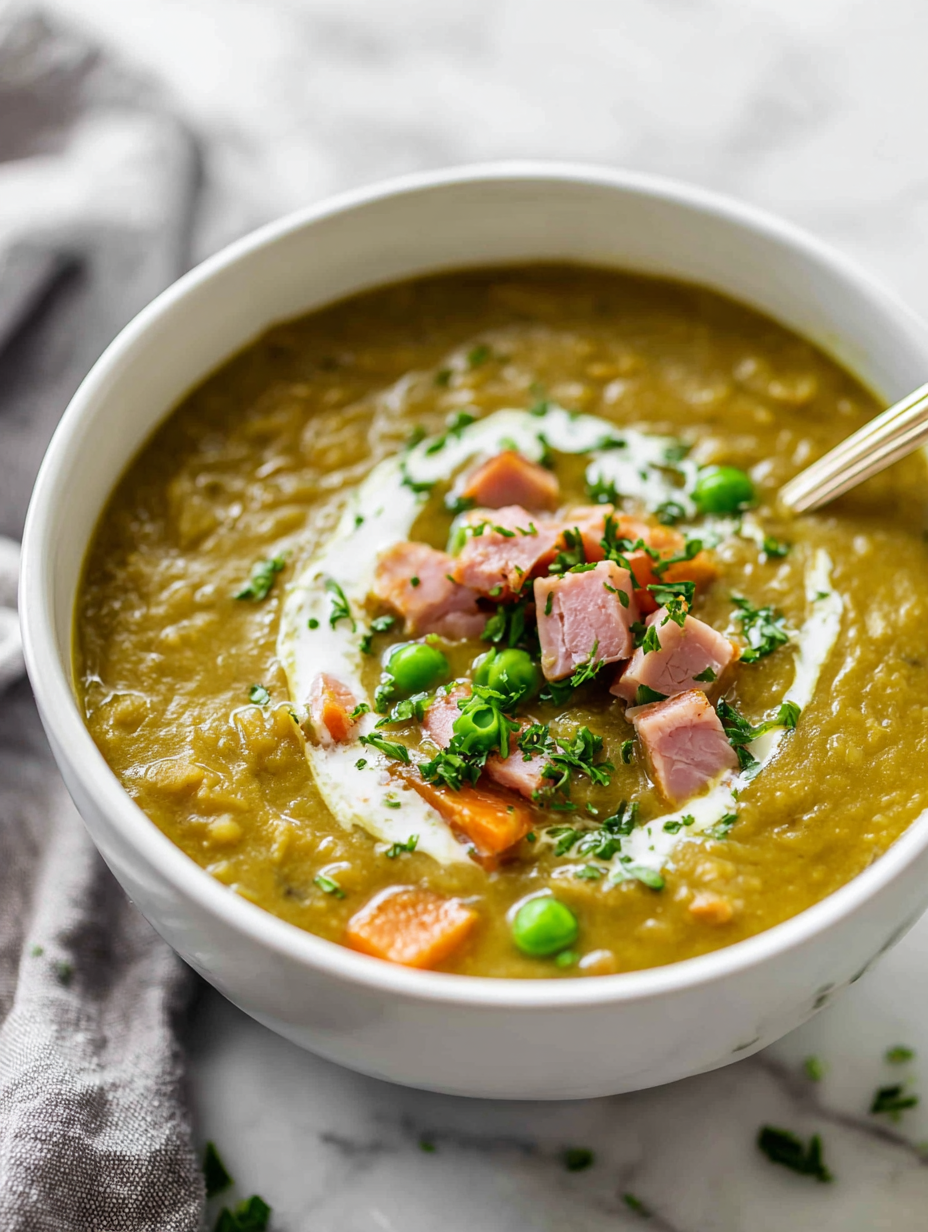
Slow Cooker Split Pea Soup
Ingredients
Equipment
Method
- Rinse the split peas thoroughly under cold water and set aside. Chop the onion, carrots, and celery into small, even pieces. Mince the garlic.
- In a skillet over medium heat, sauté the chopped onion, carrots, and celery with a splash of oil until they soften and the onions become translucent, about 5 minutes. This enhances their natural sweetness and aroma.
- Transfer the sautéed vegetables to the slow cooker. Add the rinsed peas, minced garlic, dried thyme, bay leaf, and broth. Nestle the ham hock into the mixture if using. Season with a pinch of salt and pepper.
- Cover the slow cooker with the lid and cook on low for 8 hours, allowing the peas to break down and the flavors to meld into a thick, velvety soup. Resist opening the lid during the first 4 hours to keep the heat steady.
- Halfway through cooking, check the liquid level. If it looks too thick, stir in a little more broth to keep it creamy but not too watery.
- Once the cooking time is complete, remove the ham hock. Shred the meat and discard any bones or excess fat. Return the shredded ham to the soup and stir well.
- Taste the soup and adjust seasoning with more salt and pepper as needed. Remove and discard the bay leaf.
- Serve the soup hot in bowls, garnished with fresh herbs if desired. The soup should be thick, creamy, and filled with hearty chunks of vegetables and tender ham.
Tips & Tricks for Perfect Soup
- Bolded mini-head: Use a splash of oil to sauté vegetables; it unlocks sweetness and reduces sticking.
- Bolded mini-head: For a creamier soup, blend a portion of the cooked peas before serving—use an immersion blender for ease.
- Bolded mini-head: Check the soup halfway through; if too thick, stir in a bit more broth to loosen it up.
- Bolded mini-head: To intensify smoky flavor, add a pinch of smoked paprika in the final 30 minutes of cooking.
- Bolded mini-head: For a brighter flavor, squeeze a touch of lemon juice just before serving—it’s a small spark of freshness.
- Bolded mini-head: When prepping ahead, refrigerate the cooked soup for up to 3 days or freeze for 2 months—thaw and reheat gently.
- Bolded mini-head: To fix a watery soup, remove the lid and simmer on high for 10–15 minutes until thickened and velvety.
Common mistakes and how to fix them
- FORGOT to check peas for debris → Rinse thoroughly before cooking.
- DUMPED too much liquid at once → Adjust with broth or water gradually.
- OVER-TORCHED the soup → Keep an eye after 8 hours; stir to prevent sticking.
- MISSED removing bay leaf → Always fish out before serving to avoid sharp bites.
Quick Fixes and Pantry Swaps
- When soup is too thick, splash in hot broth and stir to loosen it up.
- If soup is bland, stir in a dash of soy sauce or a squeeze of lemon for brightness.
- Splash a little vinegar if the smoky flavor is too overpowering.
- Patch watery soup by simmering uncovered for 10 minutes, stirring often.
- Shield burnt bottoms by quickly transferring to a different pot and rinsing the pan.
Prep, store, and reheat tips
- You can prep all the vegetables and rinse the peas a day in advance; store them in airtight containers in the fridge for up to 24 hours, keeping ingredients fresh and ready to throw in.
- Cooked soup keeps well in the fridge for 3–4 days; the flavors deepen over time, becoming richer and more harmonious. Reheat gently on the stove or in short bursts in the microwave, stirring and checking for heat and consistency.
- For longer storage, freeze the cooled soup in individual portions for up to 2 months. Thaw in the fridge overnight, then reheat until steaming hot, smelling the smoky and earthy notes re-emerge as it warms.
- Reheating may cause the soup to thicken; add a splash of broth or water and stir well. Bring to a gentle simmer, tasting and adjusting seasoning as needed. The flavors should be bright and comforting, with a velvety texture.
Top questions about crockpot split pea soup
1. Do I need to soak the split peas first?
Yes, soaking the peas overnight softens them slightly and reduces cooking time, but it’s not necessary. Just rinse thoroughly before adding to the slow cooker.
2. Can I make this soup smoother?
Absolutely. If you prefer a creamier texture, blend a portion of the cooked soup with an immersion blender or regular blender before serving.
3. How do I fix a watery soup?
The soup should be thick and velvety. If it’s too watery, uncover and cook on high for 20–30 minutes until it reduces and thickens.
4. Can I make this vegetarian?
Yes, you can substitute vegetable broth for the chicken broth for a vegetarian version. Use smoked paprika or liquid smoke to mimic the smoky flavor of ham.
5. Should I add acid like lemon or vinegar?
Adding a splash of lemon juice or vinegar at the end brightens the flavors and balances the earthiness of the peas.
6. How do I know when the soup is done?
The soup is ready when the peas are thoroughly soft, the broth is creamy, and the ham (if used) is tender and shreddable. It should smell smoky and earthy.
7. How long can I keep leftovers?
You can refrigerate the cooked soup for up to 4 days or freeze it for 2 months. Reheat gently on the stove, stirring and checking for the right consistency and warmth.
8. What if the soup tastes burnt?
If the soup develops a burnt smell or taste, immediately transfer it to a new pot, discard the burnt bits, and reheat the rest with extra broth if needed.
9. Any tips for prepping ingredients?
Use a sharp knife and a stable cutting board to chop vegetables evenly. Sauté in a hot skillet until fragrant and slightly caramelized for deeper flavor.
10. Should I remove the bay leaf and ham hock before serving?
Always fish out bay leaves and ham hock before serving. They add flavor but can be sharp or tough if left in the bowl.
This crockpot split pea soup is one of those dishes I turn to when I need something warm and straightforward, especially on chilly days. The slow cooker does most of the work, transforming humble ingredients into something rich, smoky, and deeply satisfying without much fuss.
It’s a recipe that feels like a quiet achievement—comforting, honest, and perfect for making ahead. No matter when I serve it, I know it’ll bring a little bit of cozy to the table, long after the last spoonful is gone.

Hi, I’m Emma Collins, the recipe developer and writer behind Sailing With Seasons. I’m so happy you’ve found your way here. This blog is my celebration of seasonal ingredients, simple cooking, and the quiet joy that comes from preparing food with intention. Sailing With Seasons is where I share the recipes, lessons, and kitchen rituals that have shaped my life. It is a space built on curiosity, care, and a deep respect for real ingredients.



Leave a Reply