
On those crazy busy nights when dinner feels like just another item on the endless to-do list, this Crockpot Chicken and Rice Soup becomes a quiet hero. It’s the kind of meal that practically makes itself, simmering gently while you handle whatever chaos has your attention. And yet, it’s still comforting enough to feel like a warm hug after a long day.
There’s something satisfying about turning simple ingredients into something nourishing and full of flavor without fuss. I love how the slow cooker transforms plain chicken, rice, and vegetables into a silky, hearty broth that’s perfect for chilly evenings or any time you need a quick, satisfying meal. It’s not fancy, but it hits home in every spoonful.
This recipe is about more than just ease; it’s about making dinner a little less stressful, a little more forgiving. When time’s tight but you still want to serve up something homemade, this soup comes through, offering warmth, comfort, and a sense of accomplishment—all with minimal effort and clean-up.
Focusing on how this soup can be a lifesaver for busy weeknights, turning simple ingredients into a comforting, nourishing meal with minimal effort, especially when time feels tight but you still crave a homemade touch.
The story behind this recipe
This recipe was born out of a hectic week when I needed something warm and filling without spending hours in the kitchen. I wanted a soup that could simmer away quietly while I tackled other chores or helped kids with homework. It’s a dish that reminds me of Sunday afternoons spent around the table, just turned into a quick, cozy dinner for busy nights. The slow simmer makes the chicken tender and the rice soak up all those savory flavors, turning simple ingredients into something unexpectedly nourishing. I keep coming back to it because it’s honest, forgiving, and always hits the spot after a long day.
Ingredient breakdown: key components
- Boneless, skinless chicken breasts: I like how they stay tender and shred easily. If you prefer darker meat, thighs work too, just adjust cooking time slightly.
- Long-grain white rice: It absorbs flavors beautifully, creating a silky broth. For a nuttier taste, try jasmine rice, but watch the cooking time.
- Carrots and celery: They add sweetness and crunch. If you’re out of celery, a dash of celery seed gives a similar note, but fresh is best for texture.
- Chicken broth: I use low-sodium so I can control salt. If you want a richer flavor, a splash of chicken stock concentrate helps, and it smells so savory.
- Onion and garlic: These are the flavor backbone. If you’re short on fresh, powders work, but they won’t give that bright, aromatic punch.
- Herbs and seasonings: A bay leaf and thyme branch are my go-to, but a pinch of oregano can lift the broth. Remove the bay leaf before serving—it’s a tiny detail but makes a difference.
- Optional add-ins: I sometimes toss in frozen peas or corn near the end. They add color and a pop of sweetness; just toss them in the last 10 minutes.
Spotlight on key ingredients
Chicken breasts:
- I prefer them because they stay tender and shred easily, absorbing flavors deeply. If you want darker meat, thighs work well, just watch cooking time.
- Rice: It becomes silky and hearty, soaking up the broth. Jasmine rice adds a fragrant note, but long-grain white is classic and reliable.
Carrots and celery:
- Carrots: They add a subtle sweetness and a bit of crunch. During cooking, they soften beautifully, releasing a cozy aroma.
- Celery: It brings a fresh, herbal note that balances the richness. Its texture becomes tender but retains a slight bite, especially with quick cooking.
Notes for ingredient swaps
- Dairy-Free: Use coconut milk instead of cream for a rich, tropical twist. It won’t be as thick but adds a subtle sweetness.
- Low-Sodium: Opt for unsalted chicken broth and add salt gradually to control sodium levels and flavor.
- Grain Swap: Quinoa or cauliflower rice can replace regular rice. Quinoa adds nuttiness, cauliflower keeps it light and keto-friendly.
- Vegetable Variations: Swap carrots and celery for parsnips or fennel for a different aromatic profile and sweetness.
- Herbs & Spices: Fresh parsley or dill can replace thyme for a brighter, fresher flavor; add at the end to preserve aroma.
- Protein Boost: Add cooked sausage or bacon for extra smoky richness. Adjust salt as these add saltiness.
- Rice Texture: For a firmer bite, use brown rice, but extend cooking time to 7-9 hours for tenderness.
Equipment & Tools
- Slow cooker: cooking vessel for long, gentle simmering.
- Cutting board and knife: preparing ingredients efficiently.
- Stirring spoon: mixing ingredients during cooking.
- Measuring cups: accurately measuring liquids and seasonings.
- Ladle: serving the soup into bowls.
Step-by-step guide to making the soup
- Gather all equipment: slow cooker, cutting board, knife, stirring spoon, measuring cups, and a ladle. Purpose: prep everything for a smooth process.
- Cut chicken breasts into 1-inch pieces. Purpose: ensures even cooking and tender bites.
- Dice carrots and celery into small, uniform pieces. Purpose: they cook evenly and release flavor.
- Add chicken, carrots, celery, and rice to the slow cooker. Purpose: layer ingredients for even distribution.
- Pour in chicken broth until ingredients are just submerged. Purpose: provides enough liquid for simmering and flavor.
- Add garlic (minced), onion powder, thyme, bay leaf, and a pinch of salt. Purpose: build a savory base.
- Set the slow cooker to low, cover, and cook for 6-8 hours. Purpose: slow simmer tenderizes chicken and melds flavors.
- Check halfway—stir gently if needed. Purpose: prevent sticking, evenly distribute heat.
- When cooking time is up, remove bay leaf and thyme sprig. Purpose: avoid bitter flavors in the final dish.
- Taste and adjust salt or seasonings as needed. Purpose: balance flavors to your preference.
- If the rice has absorbed too much liquid, add a splash of hot broth and stir. Purpose: restore desired consistency.
- Serve hot, ladling into bowls. Purpose: enjoy the comforting aroma and silky texture.
Let the soup sit for 5 minutes after cooking. Remove bay leaf and thyme sprig. Taste and adjust seasonings. Serve with crusty bread or a simple side salad for a complete meal.
How to Know It’s Done
- Chicken is fully cooked, registers 75°C (165°F) internally.
- Rice is tender and has absorbed flavors, with a slightly creamy texture.
- Vegetables are soft but not mushy, with vibrant color and aroma.
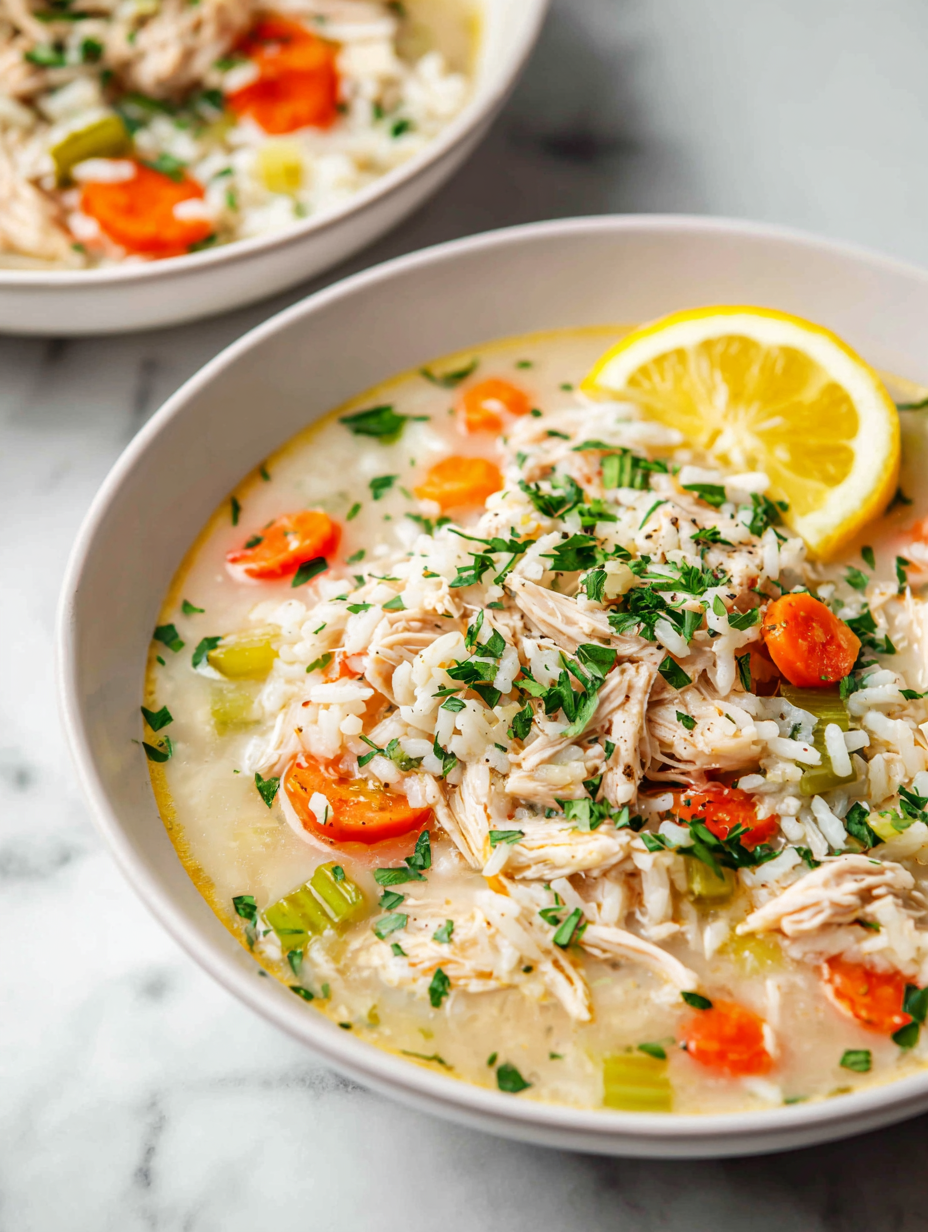
Crockpot Chicken and Rice Soup
Ingredients
Equipment
Method
- Start by gathering all your ingredients and equipment—this makes the cooking process smooth and enjoyable.
- Dice the chicken breasts into 1-inch pieces; this ensures they cook evenly and stay tender in the slow cooker.
- Chop the carrots and celery into small, uniform pieces to promote even cooking and a pleasing texture.
- Add the chicken, diced vegetables, and rice to the slow cooker, spreading them out evenly.
- Pour in the chicken broth until the ingredients are just submerged; this will be your simmering liquid.
- Stir in the chopped onion, minced garlic, dried thyme, and add a bay leaf for flavor.
- Cover the slow cooker and set it to low; cook for 6-8 hours until the chicken is tender and the rice has soaked up the broth, becoming silky and fluffy.
- Halfway through, gently stir the soup to prevent sticking and to help ingredients combine evenly.
- Once cooking time is complete, remove the bay leaf and the thyme sprig to keep the broth clean and fresh.
- Taste the soup and season with salt and pepper as needed; if you want to include peas or corn, add them now and cook for another 10 minutes until heated through.
- Serve the soup hot, ladled into bowls, and enjoy the comforting, silky texture with tender chicken and flavorful broth.
Notes
Pro tips for perfect soup
- Bolded mini-head: Sear chicken briefly before slow cooking to deepen flavor and add a toasted aroma.
- Bolded mini-head: Use long-grain rice for a silky, absorbing broth—avoid quick-cook varieties that turn mushy.
- Bolded mini-head: Dice vegetables uniformly for even cooking and consistent texture, aiming for small, tender bites.
- Bolded mini-head: Gently stir halfway through cooking to prevent rice from sticking to the pot’s edges and burning.
- Bolded mini-head: Remove bay leaf and thyme sprig immediately after cooking for a cleaner, less bitter broth.
- Bolded mini-head: If soup is too thick, add hot broth in small splashes until reaching your preferred consistency.
Common mistakes and how to fix them
- FORGOT to brown chicken first → Sear chicken before slow cooking for extra flavor.
- DUMPED too much broth → Adjust liquid to just cover ingredients for proper cooking.
- OVER-TORCHED rice → Stir halfway to prevent sticking and burning on the edges.
- SKIPPED removing bay leaf → Always remove before serving to avoid bitterness.
Quick fixes and pantry swaps
- When the soup looks too thick, splash in hot broth and stir gently to loosen it up.
- If the chicken isn’t shredding easily, give it an extra 30 minutes on low—patience helps.
- DUMPED too much rice? Add a bit more broth or water to restore the consistency.
- When the broth tastes bland, sprinkle in a pinch more salt or a squeeze of lemon for brightness.
- Splash some olive oil or a drizzle of soy sauce if the soup lacks depth or shimmer after reheating.
Prep, store, and reheat tips
- Chopped vegetables can be prepped a day ahead and kept in an airtight container in the fridge; they’ll stay crisp and fresh for up to 24 hours.
- Cooked chicken can be shredded and stored in the fridge for up to 3 days; reheat thoroughly until steaming hot to bring back juiciness.
- Uncooked rice can be rinsed and stored in a sealed jar; it keeps well for several months, but for best flavor, use within a week.
- Once cooled, the soup can be stored in an airtight container in the fridge for 3-4 days. The flavors deepen overnight, making it even more comforting.
- To reheat, warm gently on the stove over low heat, stirring occasionally; the soup will shimmer and smell savory, ready in about 10 minutes.
Top questions about Crockpot Chicken and Rice Soup
1. Can I substitute chicken thighs for breasts?
You can use boneless, skinless chicken thighs for a richer, juicier flavor. They stay tender and shred easily, just cook a bit longer if needed.
2. Can I use different rice varieties?
Yes, jasmine rice adds a fragrant aroma and slightly stickier texture, but long-grain white rice works just fine if that’s what you have.
3. What about rice substitutions?
Absolutely. Quinoa is a good swap, adding nuttiness, but it cooks faster. Cauliflower rice keeps it light but needs less cooking time.
4. My soup is too thick, what do I do?
If the soup gets too thick, stir in a splash of hot broth or water until it reaches your preferred consistency. It will shimmer and loosen right up.
5. Can I prep ingredients in advance?
You can prepare and chop vegetables a day ahead, store them airtight in the fridge, and add directly to the slow cooker for convenience.
6. How should I store and reheat leftovers?
Store leftovers in an airtight container in the fridge for up to 3 days. Reheat on the stove over low heat, stirring until steaming hot and fragrant.
7. Can I freeze cooked chicken for later use?
Yes, cook the chicken, then shred and freeze in an airtight bag for up to 3 months. Thaw in the fridge overnight before reheating in the soup.
8. What if the broth is bland?
When the broth tastes bland, add a squeeze of lemon or a pinch more salt. It brightens the flavors and makes the soup shimmer.
9. The rice is sticking or burning, how fix it?
When the rice sticks or burns on the edges, gently stir the soup and add a little broth to loosen it. It will still be comforting and tasty.
10. Can I add other herbs for flavor?
Use fresh herbs like parsley or dill added at the end of cooking for a burst of brightness and aroma that lifts the whole dish.
This soup is the kind of dish that quietly saves your evening, especially when time slips away and you’re craving something warm and familiar. It’s honest, straightforward, and always feels like a little victory in a bowl after a hectic day. I keep coming back to it because it’s simple, nourishing, and dependable.
In the end, what matters most is that this recipe offers a chance to slow down, even when the world doesn’t. It’s a reminder that good, hearty food can come together with minimal fuss but maximum comfort. And sometimes, that’s all you really need to get through the night.

Hi, I’m Emma Collins, the recipe developer and writer behind Sailing With Seasons. I’m so happy you’ve found your way here. This blog is my celebration of seasonal ingredients, simple cooking, and the quiet joy that comes from preparing food with intention. Sailing With Seasons is where I share the recipes, lessons, and kitchen rituals that have shaped my life. It is a space built on curiosity, care, and a deep respect for real ingredients.




Leave a Reply