
This crockpot vegetable stew is my go-to for turning odds and ends into something nourishing and warm. It’s about using what’s in the fridge—those limp carrots, half a onion, maybe a forgotten zucchini—and giving them new life. The slow cooker does all the heavy lifting, so I can focus on the smell that slowly fills the kitchen as everything simmers together.
What I love most is how flexible this recipe is. No need for exact measurements; just a handful of this, a splash of that. It’s perfect for busy days or when you want to clear out the crisper without wasting anything. Plus, the aroma of garlic, herbs, and simmering vegetables makes the house feel cozy without any fuss.
This recipe focuses on transforming everyday leftovers into a hearty, comforting stew using the slow cooker, emphasizing improvisation and resourcefulness in the kitchen.
The story behind this recipe
- This recipe started from a weekend of rummaging through the fridge, trying to use up odds and ends before they went bad. I realized how satisfying it is to toss a bunch of vegetables into the slow cooker and forget about it until dinner. It’s the kind of comfort food that comes together with minimal fuss but delivers on flavor and warmth.
- One chilly autumn day, I threw in some root vegetables and a splash of vegetable broth, and by evening, the house was filled with this rich, bubbling aroma. That moment made me think: why not make this a regular fallback? It’s honest, forgiving, and makes even the simplest ingredients feel special.
- story_type
Ingredient breakdown: key components
- Carrots: I use firm, bright orange carrots that hold up well over slow cooking; their natural sweetness deepens and becomes almost smoky, so if yours are limp, peel and chop fresh for better flavor.
- Zucchini: I prefer small, firm zucchinis with shiny skin, as they soften quickly and add a light, fresh note; if you use large ones, scoop out some seeds to prevent excess water.
- Onion: I always use a yellow onion for its mellow sweetness that develops during simmering; if yours is starting to sprout, just peel and slice—no waste, no fuss.
- Garlic: I love smashing garlic cloves directly into the cooker—more aroma, less fuss; if you’re sensitive, toss in a clove or two whole, then fish out before serving.
- Vegetable broth: I opt for homemade or low-sodium store-bought broth, which adds a rich, savory base; if you want a lighter stew, dilute it slightly or swap with water and a splash of soy sauce.
- Herbs: I rely on dried thyme and bay leaves for that aromatic, earthy boost; fresh herbs can work at the end, but dried ones really infuse during slow cooking.
- Tomatoes (optional): A can of diced tomatoes adds brightness and a touch of acidity—if using fresh, add them in during the last hour for a fresher punch, or skip for a more mellow stew.
Spotlight on key ingredients
Carrots and Zucchini:
- Carrots: I use firm, bright orange carrots that hold up well over slow cooking; their natural sweetness deepens and becomes almost smoky, so if yours are limp, peel and chop fresh for better flavor.
- Zucchini: I prefer small, firm zucchinis with shiny skin, as they soften quickly and add a light, fresh note; if you use large ones, scoop out some seeds to prevent excess water.
Notes for ingredient swaps
- Vegetable Broth: Use mushroom broth for an earthy, umami-rich flavor that’s perfect for mushrooms and root vegetables.
- Fresh Herbs: Swap dried thyme for fresh thyme or parsley; fresh herbs add brightness and a pop of color at the end.
- Carrots: Replace with parsnips for a sweeter, slightly nutty flavor; they soften well and add a different aroma.
- Zucchini: Use yellow squash if you prefer a milder, slightly sweeter taste that cooks just as quickly.
- Tomatoes: Add a splash of lemon juice or vinegar instead for brightness if you prefer to skip the tomatoes.
- Onion: Shallots or leeks can substitute for a subtler, more delicate onion flavor with a hint of sweetness.
- Oil: Olive oil can be replaced with coconut oil for a hint of sweetness and a slightly tropical aroma.
Equipment & Tools
- Large slow cooker: To cook all ingredients evenly over hours without fuss.
- Cutting board: To prepare vegetables safely and efficiently.
- Sharp knife: To chop vegetables into bite-sized pieces.
- Wooden spoon: To stir ingredients during cooking without scratching the crock.
- Ladle: To serve the stew neatly into bowls.
Step-by-step guide to vegetable stew
- Gather your equipment: a large slow cooker, a cutting board, a sharp knife, a wooden spoon, and a ladle for serving.
- Prep the vegetables: chop carrots, zucchini, and onion into bite-sized pieces. Mince garlic finely.
- Layer the ingredients: place the root vegetables at the bottom of the slow cooker first, then add zucchini and onion on top.
- Add liquids and seasonings: pour in vegetable broth until ingredients are just covered; stir in garlic, thyme, and bay leaves.
- Set the slow cooker: cover with lid, cook on low for 6-8 hours or high for 3-4 hours. Check occasionally.
- Check for doneness: vegetables should be tender, broth flavorful, and aroma rich. If too watery, remove lid and cook on high uncovered for 15-20 minutes.
- Adjust seasoning: taste and add salt, pepper, or more herbs if needed. Remove bay leaves before serving.
- Rest and serve: let the stew sit for 5 minutes after turning off. Ladle into bowls, garnish with fresh herbs if desired.
Let the stew rest for 5 minutes to allow flavors to meld. Remove bay leaves, taste again, adjust seasoning if needed. Serve hot, garnished with fresh herbs or a drizzle of olive oil.
How to Know It’s Done
- Vegetables are tender and easily pierced with a fork.
- Broth has thickened slightly and is aromatic.
- Stew smells rich, with no raw veggie odors remaining.
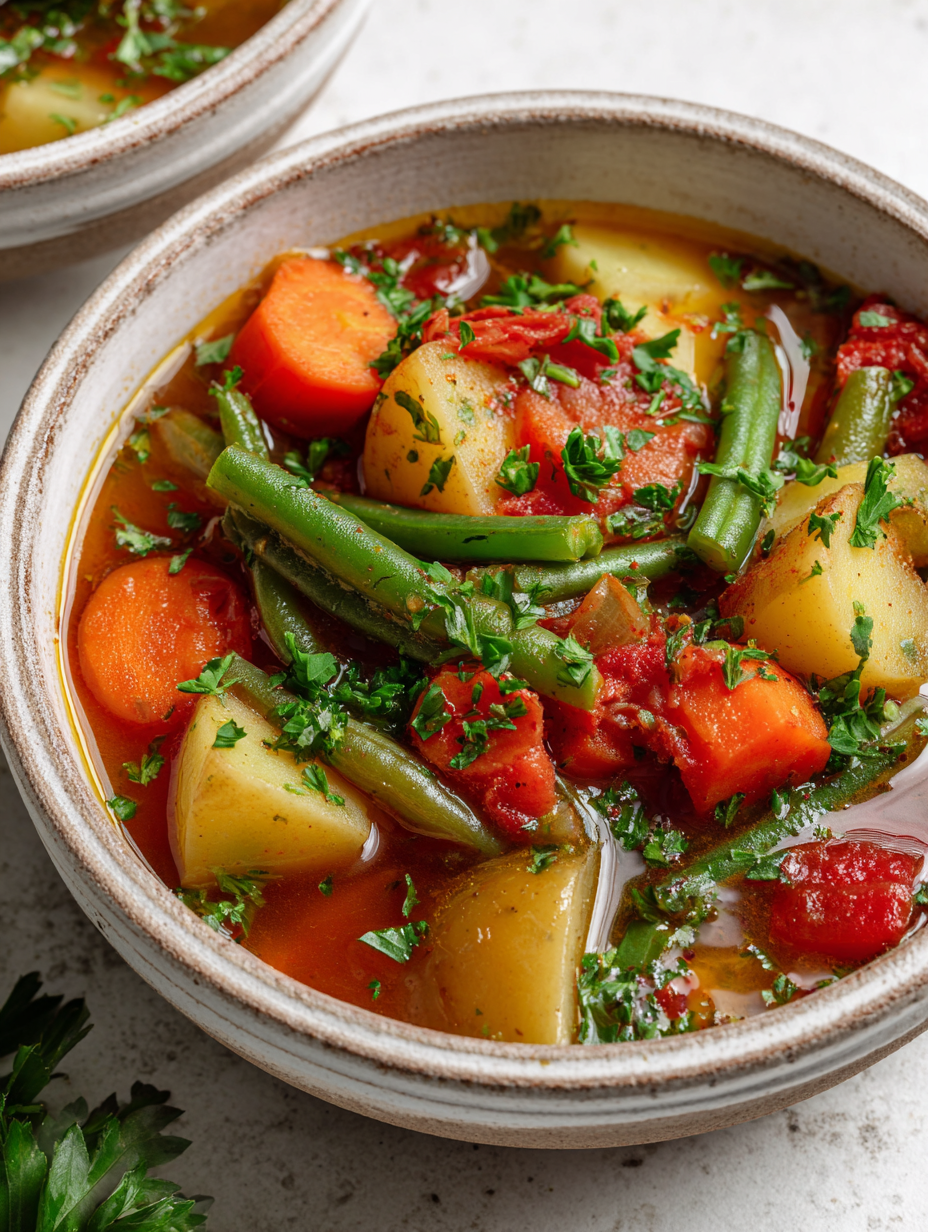
Crockpot Vegetable Stew
Ingredients
Equipment
Method
- Start by chopping your carrots into bite-sized pieces, then slice the zucchini and onion into similar-sized chunks.
- Mince the garlic cloves finely to release their fragrant aroma.
- Layer the chopped root vegetables at the bottom of your slow cooker for even cooking, then add the zucchini and sliced onion on top.
- Pour in the vegetable broth, making sure the ingredients are just covered. Stir in the minced garlic, dried thyme, and tuck in the bay leaves.
- If using, add the can of diced tomatoes to the mixture for an extra burst of brightness and acidity.
- Cover the slow cooker with its lid and set it to low for 6 to 8 hours, or high for 3 to 4 hours, until the vegetables are tender and the broth is fragrant.
- Once cooked, check that the vegetables are soft and the aroma is rich. Remove the bay leaves and taste the broth, adjusting salt if needed.
- Scoop the hot stew into bowls, garnishing with fresh herbs if desired, and enjoy its rustic, comforting flavors.
Pro tips for vegetable stew
- BOLD VEGETABLES: Sear carrots and onions in a hot skillet before adding to the crockpot for deeper flavor and caramelized sweetness.
- LAYER STRATEGY: Place hearty root vegetables at the bottom for even cooking and better flavor absorption.
- HERB INFUSION: Toss dried herbs like thyme and bay leaves early to let their aroma permeate every bite; add fresh herbs at the end for brightness.
- LIQUID LEVEL: Ensure ingredients are just covered with broth to prevent over-sogginess or under-flavoring.
- SENSORY CHECK: Smell for a rich, fragrant aroma and check that vegetables are tender but not mushy before serving.
- FINAL FLAVOR: Always taste and adjust salt and seasoning after cooking to balance the hearty vegetable sweetness with savory notes.
Common mistakes and how to fix them
- FORGOT to check vegetable tenderness, fix by extending cooking time slightly.
- DUMPED too much liquid, fix by removing lid and simmering uncovered for 10 minutes.
- OVER-TORCHED at the edges, fix by lowering heat immediately and adding a splash of water.
- SKIPPED seasoning step, fix by tasting and adding salt or herbs after cooking.
Quick fixes and pantry swaps
- When stew is too watery, splash in a cornstarch slurry and stir for 5 minutes to thicken.
- If vegetables are undercooked, extend cooking time by 30 minutes, check tenderness again.
- Splash lemon juice or vinegar when stew tastes flat, brightens flavors instantly.
- Patch over burnt edges by transferring stew to a fresh pot, avoiding charred bits.
- Shield against over-torched flavors by lowering heat immediately and adding a splash of water.
Prep, store, and reheat tips
- Chop all vegetables the night before to save time; keep in airtight containers in the fridge for up to 24 hours. The fresh-cut aroma will be bright and inviting when you start cooking.
- Assemble the stew ingredients in the slow cooker insert the night before, cover tightly, and store in the fridge. This lets flavors meld overnight, making the cooking process quicker and more fragrant.
- Cooked stew can be stored in airtight containers in the fridge for up to 3 days. Reheat gently on the stove or in the microwave, aiming for a steaming, bubbling warmth and vibrant aroma.
- For longer storage, freeze the cooled stew in freezer-safe containers for up to 3 months. Expect a slight change in texture, but the flavors will still shine through when reheated.
- Reheat the stew slowly on low heat, stirring occasionally until steaming hot. The aroma of seasoned vegetables and broth should be noticeable, with the texture remaining tender and inviting.
Top questions about vegetable stew
1. How do I prevent the vegetables from turning to mush?
Use sturdy vegetables like carrots and potatoes that hold up during slow cooking. They soften but don’t turn to mush, keeping a nice bite. Think about the texture you want, and choose accordingly.
2. When should I add quick-cooking greens?
Add delicate greens like spinach or kale in the last 15 minutes of cooking. They wilt quickly and keep their vibrant color and flavor.
3. What’s the best liquid to use for flavor?
Use a good vegetable broth or even a splash of white wine for extra depth. The broth should be flavorful enough to carry the whole dish without overpowering the vegetables.
4. How do I fix a too-thick or too-thin stew?
If you find the stew too thick, stir in a bit more broth or water during reheating. For a thicker stew, uncover and simmer for a few extra minutes until it reaches your desired consistency.
5. When should I season the stew?
Adjust seasoning at the end—taste and add salt, pepper, or herbs as needed. Sometimes a squeeze of lemon or a dash of vinegar brightens everything up.
6. How long can I keep the stew?
To save leftovers, store in airtight containers in the fridge for up to 3 days or freeze for 1-2 months. Reheat gently on the stove until steaming and fragrant.
7. How can I add smoky depth?
For a smoky flavor, add a teaspoon of smoked paprika or a dash of chipotle powder. It gives the stew a warm, complex aroma that’s unexpected but comforting.
8. Can I make it creamier without cream?
If you want a creamier texture, blend part of the stew with an immersion blender before serving. It thickens the broth and adds richness without dairy.
9. When should I add fresh herbs?
Use fresh herbs at the end for brightness—parsley, basil, or cilantro brighten up the dish. Dried herbs work during cooking for deeper flavor.
10. What should I do before serving?
Make sure to remove the bay leaves and any tough stems before serving. They can be sharp or bitter and aren’t pleasant to bite into.
This stew isn’t just about filling your belly—it’s about the quiet satisfaction of turning leftovers into something warm and nourishing. Each spoonful carries a bit of memory, a splash of improvisation, and a whole lot of comfort. It’s the kind of meal that reminds you that good food can come from simple, honest ingredients.
In times when dinner feels like a rushed afterthought, this recipe is a gentle nudge to slow down and enjoy the process. The aroma, the gentle simmer, and that first bite—these are the moments that make a humble vegetable stew feel like a small celebration of everyday life.

Hi, I’m Emma Collins, the recipe developer and writer behind Sailing With Seasons. I’m so happy you’ve found your way here. This blog is my celebration of seasonal ingredients, simple cooking, and the quiet joy that comes from preparing food with intention. Sailing With Seasons is where I share the recipes, lessons, and kitchen rituals that have shaped my life. It is a space built on curiosity, care, and a deep respect for real ingredients.







Leave a Reply