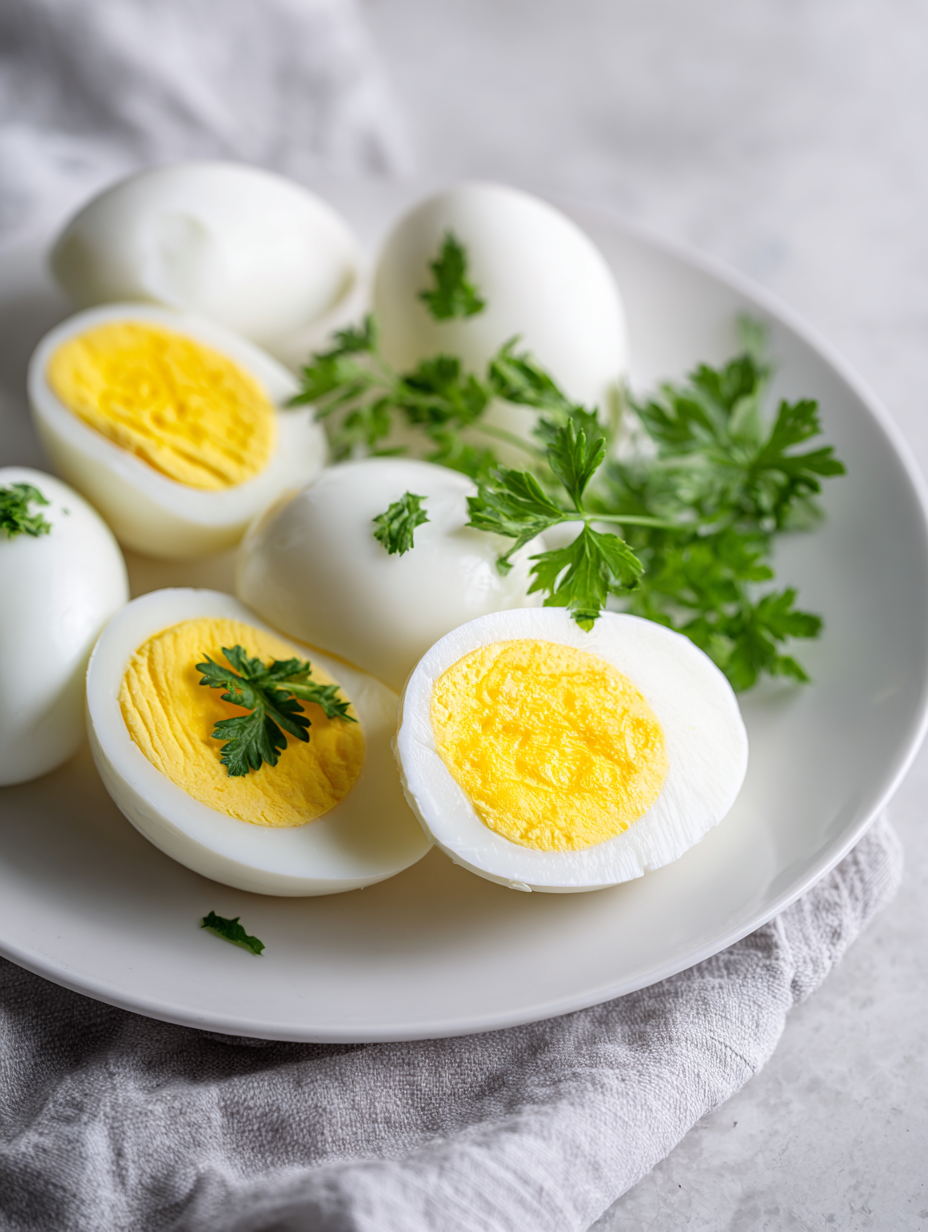
Ingredients
Equipment
Method
- Place your eggs gently into a small saucepan and cover them with cold water, about 2.5 centimeters above the eggs. Add a pinch of salt if desired. Turn the heat to medium-high and bring the water to a gentle rolling boil, listening for bubbles and steam.
- Once the water reaches a full boil, reduce the heat slightly to maintain a gentle simmer. Use a slotted spoon to carefully lower the eggs into the water, one at a time, to prevent cracking. Start your timer immediately—about 6 minutes for a slightly runny yolk, or 8 minutes for a creamier center.
- Keep an eye on the gentle boil—if it gets too vigorous, turn down the heat slightly. During the first couple of minutes, you'll notice a sulfurous smell, which is normal and will fade as the eggs cook.
- Once the timer sounds, quickly transfer the eggs into an ice bath using a slotted spoon. Let them sit in the cold water for at least 5 minutes. This rapid cooling stops the cooking process and helps loosen the shell for easy peeling.
- After cooling, gently tap each egg on a hard surface to crack the shell all over. Roll them lightly to loosen the shell further. Peel carefully starting from the wider end, where there's usually an air pocket, and peel under running cold water for smoother removal.
- Pat the peeled eggs dry with a paper towel and serve immediately for the best tender yolk and white texture, or refrigerate them unpeeled in water for up to 24 hours. Reheat gently in hot water if desired, but they’re most satisfying fresh from the ice bath.
Notes
Adjust boiling time based on your yolk preference: 6 minutes for slightly runny, 8 minutes for creamy. Using an ice bath is crucial for easy peeling and perfect texture.